Join our webinar: Improvement of Outcomes in Digestive Surgery with Prehabilitation — The Lyon Experience | 11 September 2026
Author: admin
Hospital Management Asia
Posted on by admin

Meet us at Hospital Management Asia in Bangkok, 2–3 September 2026
Inside ERAS® Implementation: A Team’s Firsthand Experience
Posted on by admin
Join our webinar: Inside ERAS® Implementation — A Team’s Firsthand Experience | 19 August 2026
Encare enters the UK market with Barts Health NHS
Posted on by admin
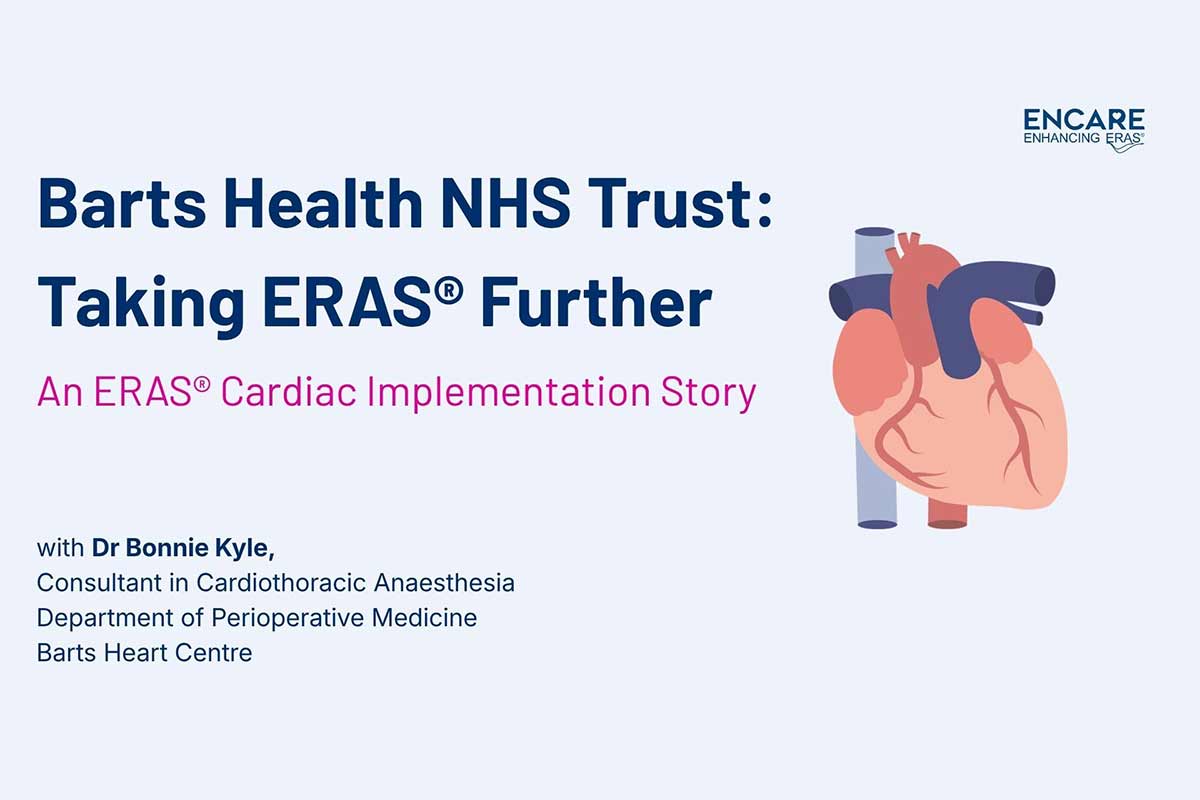
Encare is entering the United Kingdom, and we could not have asked for a better starting point. Barts Health NHS Trust in London is the first hospital in the UK to adopt the ERAS® Interactive Audit System (EIAS) for structured perioperative implementation — and the team behind the decision is exactly the kind of clinical leadership that makes a collaboration worth talking about.
The partnership covers cardiac surgery, with Barts following the EIP Assess pathway: implementing ERAS® protocols independently, supported by structured data entry in EIAS and a dedicated day of expert consultancy. ERAS® Qualification is a defined milestone, with a longer-term ambition to become an ERAS® Center of Excellence.
A program built on three years of commitment
Barts is not starting from scratch. The team, led by Dr Bonnie Kyle, Consultant in Cardiothoracic Anaesthesia, and strong advocate for ERAS® in the UK, has been running an ERAS® cardiac surgery program for three years and has enrolled approximately 1,200 patients. That foundation reflects genuine clinical commitment and a culture that was already oriented toward structured recovery.
What changes now is the ability to measure it. With EIAS, the team gains real-time compliance data, the ability to benchmark with international cardiac surgery centers, and a structured audit framework aligned with the criteria for ERAS® Qualification. Gaps that were previously invisible, such as documentation of early mobilization or 30-day follow-up processes, become visible and addressable.
“ERAS succeeds because the whole multidisciplinary team buys into the ERAS philosophy, and they all work together towards those common goals.” — Dr. Bonnie Kyle
The UK context
ERAS has strong institutional backing in the UK. NHS England has incorporated ERAS® principles into national surgical recovery initiatives, and there is growing clinical momentum around perioperative care as a lever for both patient outcomes and system efficiency. Barts’ decision to pursue ERAS® Qualification, positions the team to lead that conversation nationally and to serve as a reference point for other UK centers considering a more structured approach.
Dr. Bonnie Kyle has also visited leading Cardiac centers applying ERAS in Europe, including programs in Germany, as part of building a vision for where Barts can go. The ambition is not only to improve outcomes at a single site, but to raise the standard of cardiac perioperative care more broadly.
Barts as a reference site
For Encare, this is more than a new customer in a new market. The UK has been on our radar for some time, and Barts Health NHS Trust — one of the largest NHS trusts in England — is the right place to start. The goal is for Barts to grow into a reference site: a living example of what structured ERAS® implementation can look like in a complex, high-volume NHS environment, for other UK hospitals asking themselves the same questions the Barts team was asking a year ago.
Rasmus Waller, CEO of Encare:
“Many hospitals are committed to ERAS® and have built strong programmes locally. But understanding how closely that work follows the evidence — and where improvement is still possible — requires structured measurement. What sets Barts Health apart is the willingness to measure their cardiac ERAS® programme against international guidelines and act on what they find. After three years of clinical commitment, they are now aiming to become the first ERAS® Cardiac Qualified Center in the UK — exactly the kind of partner we wanted as Encare enters the country.“
Dr. Bonnie Kyle, cardiac anesthesiologist at Barts Health NHS Trust:
“We see ERAS as proactive prevention of morbidity complications — proactively making the right decisions and interventions at the right time to keep patients on track and prevent morbidity.“
Every ERAS® implementation journey looks different. Whether your team is just getting started or has been running a program for years, Encare can help you understand where you stand, measure what matters, and take the next step with confidence. Learn more at Solution – Encare.
Watch the interview here:
Interview: Barts Health NHS Trust: Taking ERAS® further – Interview
Posted on by admin
Video subtitles available. Click Captions (cc) to select your preferred language. Please note that these subtitles are auto-generated, so minor errors may occur.
Most hospitals doing ERAS are doing it with genuine commitment. The question is: do they know how well?
Dr Bonnie Kyle, Consultant in Cardiothoracic Anaesthesia, at Barts Health NHS Trust, has spent three years building one of the UK’s most committed ERAS cardiac surgery programs. Around 1,200 patients. Real clinical results. And a clear-eyed view of what they still could not see.
In this short interview, she talks about what drove that commitment, what a structured audit system changes in practice, and what she would say to other centers doing ERAS their own way.
“To do ERAS® properly, you really need to understand that it is the entire perioperative pathway.”
Barts is now working toward ERAS® Qualification. We are proud to support that journey.
In this six-minute interview, Dr Bonnie Kyle, Consultant in Cardiothoracic Anaesthesia at the Barts Heart Centre, Barts Health NHS Trust in London, explains why the team brought ERAS® into cardiac surgery three years ago and what it has meant for patients and staff. It is aimed at cardiac surgeons, anaesthetists, intensivists, nurses and hospital leaders who are considering or expanding ERAS® in cardiac surgery. You will learn why ERAS® covers the entire perioperative pathway rather than early extubation and mobilisation alone, and how accreditation, audit and benchmarking support continuous improvement.
The team started ERAS® in response to a large post-COVID waiting list, increased patient acuity and long hospital stays, with an initial focus on waiting lists and length of stay. Because they collected a wide range of outcome measures from the start, they could show a reduction in morbidity across several domains for patients on the ERAS® pathways compared with conventional pathways, and they now see ERAS® as proactive prevention of morbidity and complications, with a shared multidisciplinary focus on recovery. The interview covers what accreditation means: confidence for patients that care follows international best practice, less variation between individual clinicians, and recognition for staff. Dr Kyle describes the centre's outcome, process and balancing measures – length of stay, how long indwelling devices such as drains stay in, and morbidity – which have all improved steadily, and explains why real-time audit of compliance with individual ERAS® elements, as with the ERAS® Interactive Audit System (EIAS), and benchmarking against leading international centres fill the remaining gap. The interview closes with the difference between ERAS® and traditional fast tracking, and why complex and higher-risk patients may gain the most from a structured ERAS® approach.
Format: Video interview
Duration: 6 minutes
Language: English (subtitles in English, French, German, Spanish, Portuguese and Swedish)
Speaker
- Dr Bonnie Kyle
Consultant in Cardiothoracic Anaesthesia, Barts Heart Centre, Barts Health NHS Trust, London – leads the enhanced recovery programme in cardiac surgery; describes how it was started, what accreditation means and how audit and benchmarking drive improvement.
Chapters
- 00:00 Introduction
- 00:18 Why Barts started ERAS® in cardiac surgery
- 01:48 What accreditation means for patients and staff
- 03:11 Outcome measures, audit and benchmarking
- 04:37 ERAS® versus fast tracking
Related resources
- ERAS® Interactive Audit System (EIAS) – Encare's audit system for ERAS® compliance and outcomes
- ERAS® Implementation Program (EIP) – Encare's structured programme for introducing ERAS®
- ERAS® Qualification and the map of ERAS® Qualified Centers
- ERAS® Society – guidelines and the ERAS® programme
- ERAS® Cardiac Society – perioperative care in cardiac surgery
- Barts Health NHS Trust
Want to see how EIAS can support ERAS® audit and benchmarking in cardiac surgery? Book a demo
Building enterprise-scale ERAS® data infrastructure
Posted on by admin

Case study
Building enterprise-scale ERAS® data infrastructure
Slovenia’s first ERAS® Qualified center — and the results behind it
Posted on by admin
Case study
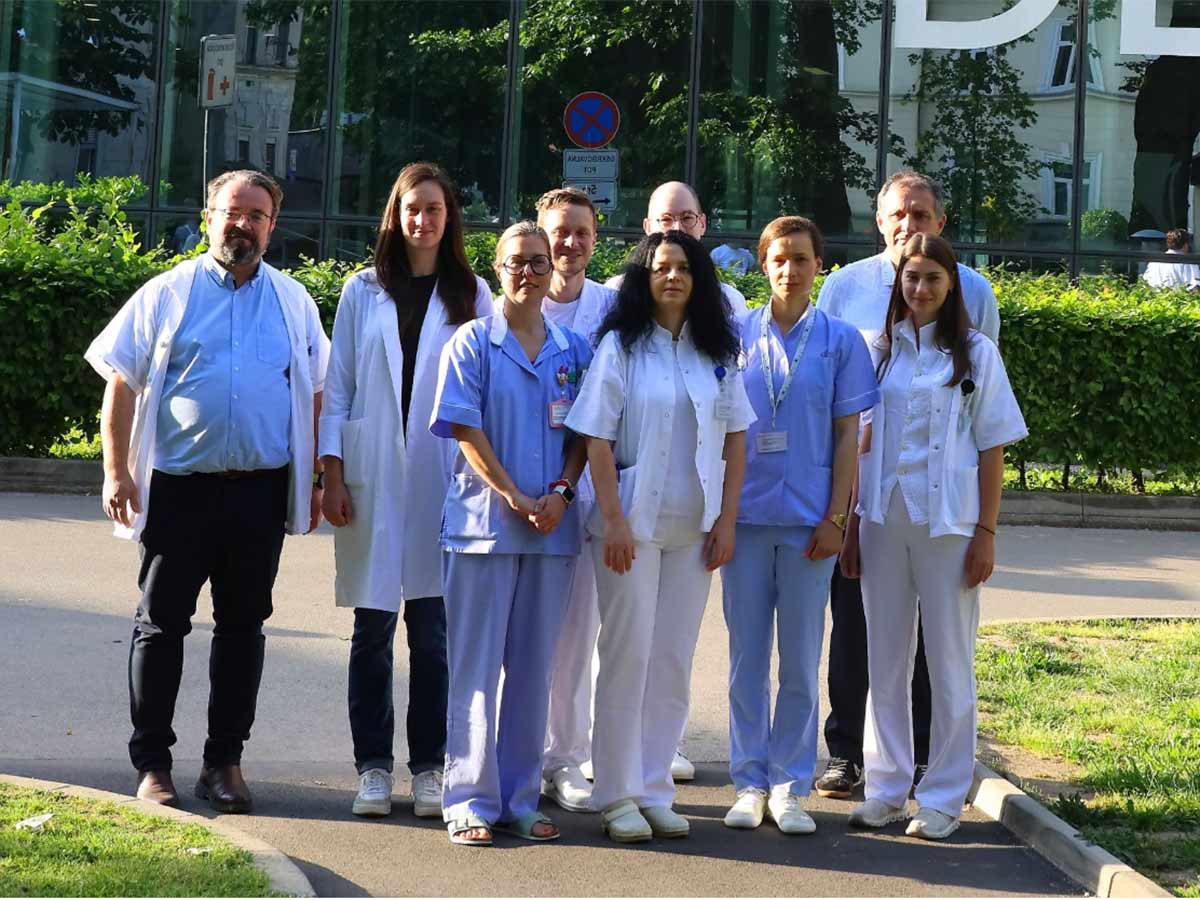
Slovenia's first ERAS® Qualified Center — and the Results Behind It
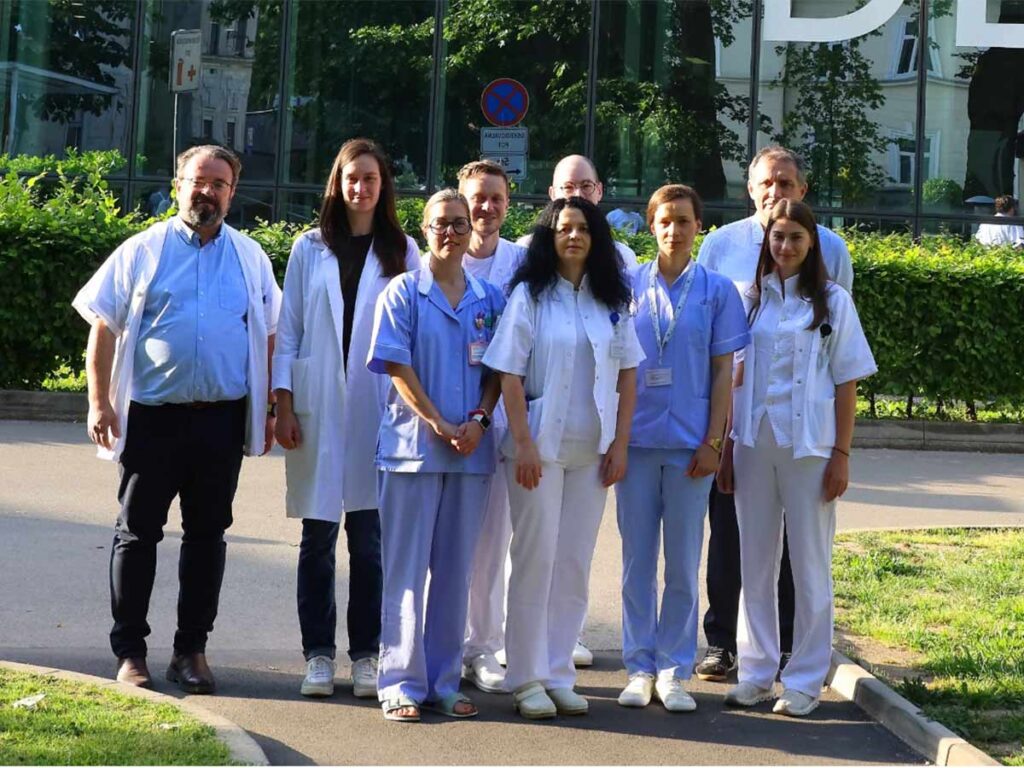
Institute of Oncology Ljubljana
Challenge
Like many clinical teams, the Department for Abdominal Surgical Oncology at the Institute of Oncology Ljubljana in Slovenia had been working on their own to implement ERAS® for many years. Without a structured framework and systematic auditing tools, it was difficult to gauge how well the ERAS® concept worked.
ERAS® compliance
achieved
achieved
79
%
Reduction in
length of stay
length of stay
-46
%
Reduction in ICU
admissions
admissions
-55
%
Complication
rate
rate
18
-55
%
Overview
The Department for Abdominal Surgical Oncology at the Institute of Oncology Ljubljana has become the first ERAS® Qualified Center in Slovenia, achieving ERAS® Qualification for colorectal surgery based on criteria defined from the ERAS® Society. In just eight months, the team cut the average length of stay nearly in half, brought complications down from 78% to 18%, and reduced readmissions to zero — while raising compliance towards ERAS® best practice from 47% to 79%.
Results at a glance
| Measure | Before ERAS® | After ERAS | Change |
|---|---|---|---|
| Length of stay | 11.7 days | 6.3 days | -46% |
| Complications | 78.4% | 18.2% | -77% |
| ICU admissions | 41.2% | 9.1% | -78% |
| Readmissions | 4% | 0% | -100% |
| ERAS® protocol compliance | 46.8% | 79% | +32% |
Results compare the before ERAS® patient cohort (51 patients) with the after ERAS® group (22 patients).
“Becoming the first ERAS® Qualified Center in Slovenia through the successful implementation of the ERAS® colorectal surgery pathway within our Department for Abdominal Surgical Oncology, is an important milestone for our team and our hospital. However, the true value of this achievement lies in better care, recovery, and overall outcomes for our patients.
The ERAS® implementation journey taught us that meaningful change is only possible when people work together with trust, respect, and a shared purpose. Although the process brought challenges and different perspectives, it also reminded us that our greatest strength lies in collaboration and in focusing on our shared goals rather than our differences.
We are proud of what we have achieved together, and we remain committed to continuous improvement, multidisciplinary teamwork, and providing the highest quality care for every patient.”
— The team at the Department for Abdominal Surgical Oncology, Institute of Oncology Ljubljana, Slovenia
About the customer
The Institute of Oncology Ljubljana is Slovenia’s national cancer center, located in Ljubljana. Its Department for Abdominal Surgical Oncology specializes in the surgical treatment of abdominal cancers, including colorectal cancer, caring for approximately 200 patients per year from across the country. The department operates as a referral center for colorectal oncology at a national level, bringing together a core multidisciplinary team of surgeons, anesthesiologists, nurses, dietitians, physiotherapists, and clinical coordinators.
A foundation built on commitment
The team at the Institute of Oncology Ljubljana had been working with ERAS® since 2006. They had developed parts of the pathway and achieved improvements in some areas — but, like many clinical teams, they fell short of being able to measure compliance towards the best practice guidelines in order to obtain a sustainable way of working. They brought years of clinical commitment with them. What was missing was structure.
What the implementation involved
The team began using the ERAS® Interactive Audit System (EIAS) to audit their practice systematically, identifying exactly where the gaps were and what needed to change. What followed was a concentrated period of process improvements: the team developed educational materials for both staff and patients, held internal presentations to build awareness across the department, and worked through challenges together using a plan-do-study-act approach.
One of those challenges was navigating a transition to the updated colorectal protocol mid-implementation. Thanks to their structured approach to change management, the team absorbed the update without significant disruption to the implementation timeline.
Throughout the implementation, the team was guided and coached by Professor Emeritus Olle Ljungqvist of Örebro University Hospital in Sweden and ERAS® Society Founder and Ambassador. The implementation program ran over a period of only eight months.
A committed multidisciplinary team
This was a genuinely multidisciplinary effort, bringing together surgeons, anesthesiologists, a clinical dietitian, a physiotherapist, a surgical nurse, an anesthesiology nurse, a clinical nutrition specialist, and management representation. Clinical leads Dr. Erik Brecelj and Dr. Rok Petreč, alongside ERAS® coordinator Ms. Brigita Avramović Brumen, led a team that ultimately described one of the most valuable outcomes of the process as something less visible than a compliance score: a functional, sustainable framework for teamwork.
What comes next
The Institute of Oncology Ljubljana serves colorectal cancer patients from across Slovenia, treating approximately 200 patients per year in this department alone. The team is already planning to extend the reach of their work beyond the institution, with a national ERAS® symposium planned for 1 October 2026 to bring together stakeholders from across the country.
ERAS® Qualification is not the endpoint. For this team, it marks the beginning of sustained work and audit, continuous staff education, and broader ERAS® adoption across Slovenia.
Hospitals that are implementing ERAS® through the ERAS® Interactive Audit System (EIAS) and are following a structured implementation may fulfill the criteria to be recognized by the ERAS® Society as an ERAS® Qualified Center. Learn more about how Encare supports structured ERAS® implementation at Solution Encare.
Webinar: From Evidence to Results: How ERAS® and the ERAS® Interactive Audit System (EIAS) Transform Perioperative Care
Posted on by admin
In this masterclass, held in Portuguese, Cláudia Santos Silva from Encare and Dr Manuel Rosete from the Coimbra University Hospitals in Portugal show how ERAS® and the ERAS® Interactive Audit System (EIAS) close the gap between the perioperative care teams believe they deliver and the care they actually deliver. It is aimed at surgeons, anaesthesiologists, nurses, allied health professionals and hospital managers in Portugal, Brazil and the rest of the Portuguese-speaking world. You will learn why protocol compliance drives surgical outcomes, how structured audit keeps compliance from slipping, and how one tertiary hospital grew ERAS® from a single colorectal protocol to 11 protocols and a dedicated ERAS® clinic.
Cláudia opens with a question for every clinician: what percentage of the care protocol was actually followed for your last surgical patient, measured rather than assumed? She outlines the scale of the problem – more than 313 million operations a year and one in five surgical patients with a postoperative complication – and presents recent evidence that ERAS® also works in Latin American hospitals. She explains the three principles of ERAS® (multidisciplinary, data-driven and evidence-based), the relationship between the ERAS® Society and Encare, and the multicentre study in Annals of Surgery showing that patients with more than 70% compliance have significantly fewer complications. After a demonstration of the ERAS® Interactive Audit System (EIAS), now also available in Portuguese, Dr Manuel Rosete describes the Coimbra experience: changing the mindset of clinicians and patients, training every professional along the pathway, dedicated nursing time, a multidisciplinary ERAS® consultation with six specialties in one morning, automated order sets, early discharge criteria based on clinical judgement and CRP, and an automated telephone follow-up after discharge. In his words, the median postoperative length of stay fell by 2 to 3 days, and the hospital has since moved from separate ERAS® consultations to a single interdisciplinary ERAS® clinic. The session ends with questions from the audience on first steps, the biggest challenges, data collection with SClínico and dedicated nursing and dietitian time.
Recorded: 13 May 2026 (live webinar)
Duration: 85 minutes
Language: Portuguese (subtitles in Portuguese, English, French, German, Spanish and Swedish)
Speakers
- Cláudia Santos Silva
Nurse, Encare – host and presenter; covers the problem of unmeasured compliance, the evidence behind ERAS®, the ERAS® Society and Encare, and the EIAS platform. - Dr Manuel Rosete
General Surgeon, ULS Coimbra (Coimbra University Hospitals), Portugal, and Director of the ERAS® Clinic – describes how Coimbra implemented and expanded ERAS®, and answers questions from the audience.
Chapters
- 00:00 Welcome and introduction
- 00:20 How much of the protocol is actually followed?
- 01:49 About the speaker
- 03:22 Agenda
- 04:34 The problem: variation in surgical care
- 07:39 The iceberg: what hospitals don't measure
- 08:34 ERAS® evidence from Latin America
- 11:28 What ERAS® is
- 12:27 Three principles: multidisciplinary, data-driven, evidence-based
- 14:00 The ERAS® Society and Encare
- 15:45 Measurable results of ERAS®
- 17:03 Return on investment
- 18:44 Why protocol compliance matters
- 20:23 Poll: the biggest challenge in surgical quality
- 21:36 Compliance and outcomes: the Annals of Surgery study
- 23:32 Introducing EIAS
- 24:06 EIAS video demonstration
- 28:34 EIAS in Portuguese and what sets it apart
- 33:29 ERAS® protocols and specialties
- 33:48 Poll: your institution's current approach
- 36:39 Introducing Dr Manuel Rosete
- 37:20 ERAS® at Coimbra: aims and benefits
- 39:21 The history of the Coimbra programme
- 40:22 Challenge 1: changing mindsets
- 46:32 Challenge 2: training healthcare professionals
- 48:23 Challenge 3: human resources and dedicated time
- 50:59 Challenge 4: the patient pathway and the ERAS® consultation
- 53:19 Admission, order sets and automated care plans
- 55:39 Minimally invasive surgery and benchmarking
- 56:49 Early discharge criteria and CRP
- 59:03 Results: length of stay in Coimbra
- 59:59 Remote clinical follow-up after discharge
- 1:03:00 Growth in surgical activity
- 1:03:30 Auditing outcomes and complications with EIAS
- 1:05:06 Benchmarking with other hospitals
- 1:05:52 From one protocol to 11
- 1:07:23 Growing pains: keeping teams motivated
- 1:09:12 From ERAS® consultations to an ERAS® clinic
- 1:10:52 Research, training centre and further expansion
- 1:13:01 Invitation to the ERAS® Hands-On course
- 1:14:26 Closing remarks
- 1:17:06 Q&A: first steps for hospitals without structured measurement
- 1:18:08 Q&A: the biggest challenge in Coimbra
- 1:19:59 Q&A: data collection and integration with SClínico
- 1:22:11 Q&A: dedicated nursing and dietitian time
- 1:24:40 Close
Related resources
- ERAS® Interactive Audit System (EIAS) – Encare's audit system for ERAS® compliance and outcomes
- ERAS® Implementation Program (EIP) – structured support for teams starting ERAS®
- ERAS® colorectal protocol – the protocol Coimbra started with
- ERAS® Qualification and the map of ERAS® Qualified Centers
- ERAS® Society – guidelines and the ERAS® programme
- Enhanced Recovery After Surgery: a true revolution at Coimbra University and Hospital Center – article on the Coimbra programme (Revista Portuguesa de Cirurgia)
- The Impact of the Enhanced Recovery After Surgery (ERAS) Protocol on Colorectal Surgery in a Portuguese Tertiary Hospital – Acta Médica Portuguesa, 2022
Want to see how EIAS can support ERAS® implementation and audit in your hospital? Book a demo
Video subtitles available. Click Captions (cc) to select your preferred language. Please note that these subtitles are auto-generated, so minor errors may occur.
A free masterclass with Claudia Santos Silva (Encare) and clinical panelist Dr. Manuel Rosete, General Surgeon — ULS Coimbra
313 million surgeries per year. Up to 20% with preventable complications. The evidence is there. But without consistent measurement, even the best protocols fall short.
In this masterclass, we explore how ERAS® — the gold standard in perioperative care — combined with the ERAS® Interactive Audit System (EIAS), the only digital audit platform validated by the ERAS® Society, gives hospital teams the tools to move from theory to practice.
The result? Perioperative care that is measurable, sustainable, and with real clinical and financial impact.
Clip: Why Full ERAS® Compliance Matters
Posted on by admin
Why full ERAS® compliance matters
In this clip, Associate Professor Ulf O. Gustafsson, Chairman of the ERAS® Society and guideline author, explains why improved outcomes in colorectal surgery are driven not by isolated interventions, but by high adherence to the full ERAS® Colorectal Protocol.
Evidence consistently shows that comprehensive implementation of the ERAS® Colorectal pathway is associated with:
- ~50% fewer complications
- Shorter length of stay
- Improved survival
Even when the impact of individual elements is difficult to isolate, the conclusion is clear: ERAS® delivers results when implemented as a complete, structured pathway.
Education Session: What’s New in the 2025 ERAS® Society Colorectal Guideline
Posted on by admin

Video subtitles available. Click Settings to select your preferred language. Please note that these subtitles are auto-generated, so minor errors may occur.
In this ten-minute education session, Associate Professor Ulf Gustafsson, colorectal surgeon at Karolinska University Hospital in Stockholm and first author of the guideline, presents what has changed in the 2025 ERAS® Society guideline for elective colorectal surgery. It is aimed at colorectal surgeons, anaesthesiologists, ERAS® nurses and ERAS® teams who work with the colorectal protocol. You will learn how the new guideline was developed, which recommendations have been strengthened or weakened, and why a low level of evidence does not necessarily mean that an intervention is unimportant.
Dr Gustafsson starts with the history of the colorectal guideline, from the first version in 2005 to this fourth update, published in the journal Surgery in 2025, and reminds viewers that implementing the full ERAS® protocol reduces complications by about 50% and shortens length of stay by two to three days. The new guideline follows a standardised methodology using the GRADE system: the work took almost a year, around 3,400 studies were read on antibiotics alone, and more than 800 studies were graded. He then goes through the main changes. Prehabilitation is not recommended, as there was not enough evidence, although results from ongoing RCTs may change this. Smoking cessation and IV iron keep moderate evidence, while the evidence for stopping alcohol four weeks before surgery is somewhat lower. No specific predictive tool, such as ASA or POSSUM, is recommended. The timing of thromboprophylaxis is more liberal, there is more evidence for immunonutrition but no recommended formula, and preoperative carbohydrate loading is still recommended despite weaker evidence. The evidence for minimally invasive surgery is much stronger, with no clear difference between robotic and laparoscopic surgery. Epidurals are not recommended in minimally invasive surgery but remain a recommendation in open surgery, and the mobilisation target has been lowered from six to three hours per day. The session ends with how the new guideline is being translated into the ERAS® Interactive Audit System (EIAS).
Recorded: 26 January 2026
Duration: 10 minutes
Language: English (subtitles in English, French, German, Spanish, Portuguese and Swedish)
Speakers
- Associate Professor Ulf Gustafsson
Senior Consultant Surgeon and Head of the Division of Coloproctology, Center for Digestive Diseases, Karolinska University Hospital, Stockholm, Sweden; Interim Chair and Guideline Co-Chair, ERAS® Society – first author of the 2025 ERAS® Society colorectal guideline; presents the methodology and the changes in the new guideline.
Chapters
- 00:00 Introduction
- 00:25 History of the ERAS® colorectal guidelines
- 01:22 What the ERAS® protocol achieves
- 02:05 Interventions by level of evidence
- 03:30 Methodology: the GRADE system
- 04:30 What has changed since the previous guideline
- 04:43 Preoperative optimisation and prehabilitation
- 05:28 Smoking, IV iron and alcohol
- 06:04 Predictive tools
- 06:33 Thromboprophylaxis and immunonutrition
- 07:11 Preoperative carbohydrate loading
- 07:28 Minimally invasive surgery
- 08:02 Epidural analgesia
- 08:23 Postoperative mobilisation
- 08:58 Conclusions
Related resources
- Guidelines for perioperative care in elective colorectal surgery: ERAS® Society recommendations 2025 (Gustafsson et al., Surgery 2025)
- ERAS® colorectal protocol
- ERAS® Interactive Audit System (EIAS) – Encare's audit system for ERAS® compliance and outcomes
- ERAS® Implementation Program (EIP) – the structured implementation programme
- ERAS® Society guidelines
- ERAS® Society – guidelines and the ERAS® programme
Want to see how EIAS supports the updated colorectal protocol and ERAS® audit in your hospital? Book a demo