Generic selectors
Exact matches only
Search in title
Search in content
Post Type Selectors
pages
post
Filter by Categories
All News
Case studies
News About Encare
Product updates
Publications
Upcoming events
Video & Webinars
ENHANCE ERAS® WITH ENCARE
Generic selectors
Exact matches only
Search in title
Search in content
Post Type Selectors
pages
post
Filter by Categories
All News
Case studies
News About Encare
Product updates
Publications
Upcoming events
Video & Webinars

Precision ERAS® – Your Roadmap to Next-Gen Care

Precision ERAS® – Your Roadmap to Next-Gen Care

Discover the potential of simulating outcomes before you change them.

Precision ERAS® is an innovative concept that uses hospital data to explore how targeted compliance improvements might influence outcomes.

Prioritize the right elements, reduce complications, and support smarter continuous improvement discussions.

Meet Precision ERAS®

Precision ERAS® is being developed as the next evolution of the ERAS® Interactive Audit System (EIAS).

It is designed to model the potential effect of improved ERAS® guideline adherence on patient outcomes—before changing local processes.

What it aims to deliver:

  • Simulate how changes in compliance might affect outcomes.
  • Identify which ERAS® elements could reduce readmissions, LOS, or complications.
  • Support more informed discussions and reduce guesswork in continuous improvement strategy.

Built for Real Clinical Decisions – Concept Scenarios

Use Case 1 – Nurse Team

Use case nurse team

Use Case 2 – Surgeon Team

Use case surgeon team

Use Case 3 – Researcher

Use case researcher

“It helps us see where to focus our efforts to improve outcomes rather than just compliance.” – Beta Customer User

Be Part of What’s Next

Precision ERAS® is under development and external validation.

Do you want to be among the first to see what’s next?
Register for our newsletter to stay updated. Subscribe to Updates


Explore ERAS® Chatbot – Your 24/7 Clinical Companion

ERAS® Colorectal Surgery Guidelines 2025 – Key Updates

ERAS® Colorectal Surgery Guidelines 2025 – Key Updates

Eras® colorectal surgery guidelines 2025

The ERAS® Society has released the long-awaited 2025 colorectal surgery guidelines, reflecting the latest evidence and global best practices. These updates refine perioperative care across preoperative, intraoperative, and postoperative phases — adding precision, introducing new recommendations, and adjusting prior guidance where evidence has evolved.

At Encare, we are proud to be the only company working directly with the ERAS® Society and the guideline authors to bring the 2025 colorectal surgery updates into the ERAS® Interactive Audit System (EIAS). This means that EIAS is the only platform globally where hospitals can access, apply, and measure adherence to the most up-to-date ERAS® standards — with full confidence that the content is accurate, validated, and aligned with the experts who wrote the guidelines.


Below is a breakdown of the key changes clinicians should be aware of.

Preoperative

  • Risk & Comorbidity
    • Use validated screening tools for high-risk patients.
    • Clearer guidance on optimizing comorbidities.
    • Anemia: routine screening; IV iron + EPO now included.
  • Lifestyle
    • Alcohol cessation: downgraded (weak).
    • Smoking cessation: unchanged, strongly recommended.
    • Prehabilitation: no specific regimen recommended.
  • Nutrition
    • Routine screening mandatory; immunonutrition added for malnourished.
  • Other
    • PONV prophylaxis: expanded optimal regimens.
    • Thromboprophylaxis: intraop IPC + more liberal pharmacologic timing.
    • Bowel prep: MBP alone discouraged (weaker); oral antibiotics emphasized.
    • Carb loading: downgraded (weak, no clinical benefit).


Intraoperative

  • Normothermia: methods clarified, strong support remains.
  • Fluids: shift from “near-zero” to slightly positive balance.
  • Surgery: MIS = standard of care.
  • Drainage: still not routine; weaker evidence for rectal resections.


Postoperative

  • Tubes/Monitoring
    • NGT: not recommended post-op (evidence downgraded).
    • Glucose control: HbA1c + specific post-op targets included.
  • Fluids: maintain slightly positive balance (≤2.5 kg weight gain).
  • Urinary catheter: remove ≤24h (colonic MIS), ≤48h (rectal MIS).
  • Ileus: multimodal prevention; chewing gum reintroduced.
  • Analgesia: multimodal (acetaminophen, NSAIDs, TAP blocks, intrathecal morphine); epidural alternatives for open surgery now accepted.
  • Nutrition: early oral feeding + supplements; immunonutrition supported.
  • Mobilization: ≥3 hrs/day from POD1 to discharge.


Highlights & Take-Homes

  • Precision & detail added: predictive tools, comorbidity optimization, glucose, anemia.
  • Lifestyle advice weakened: alcohol cessation, carb loading, Mechanical Bowel Preparation (MBP) avoidance.
  • Practice shifts: MIS as standard, fluids slightly positive, catheter timing specified.
  • Recovery focus: early feeding, structured mobilization, multimodal ileus & pain prevention.


Reference

Gustafsson, U. O., Rockall, T. A., Wexner, S., How, K. Y., Emile, S., Marchuk, A., Fawcett, W. J., Sioson, M., Riedel, B., Chahal, R., Balfour, A., Baldini, G., de Groof, E. J., Romagnoli, S., Coca-Martinez, M., Grass, F., Brindle, M., & Hubner, M. (2025). Guidelines for perioperative care in elective colorectal surgery: Enhanced Recovery After Surgery (ERAS) Society recommendations 2025. Surgery, 184, Article 109397. https://doi.org/10.1016/j.surg.2025.109397


With these updates, the ERAS® Society underscores the ongoing evolution of enhanced recovery, aiming for safer surgery and faster recovery worldwide. Integrated into EIAS, these guidelines become immediately actionable, helping teams measure, compare, and continuously improve patient outcomes.

Learn more about how your hospital can apply the 2025 colorectal protocol in EIAS: Speak with Encare

EIAS in Your Language

EIAS in Your Language

Multiple language support coming soon

Eias in your language

We are excited to share that the ERAS® Interactive Audit System (EIAS) will soon be made available in multiple languages.

Today, many hospitals try to rely on browser-based translation tools, such as Google Translate, to navigate EIAS. However, these tools do not work properly across the platform—some parts remain untranslated, while others break the interface or even cause crashes. This makes them unreliable for clinical use and creates unnecessary risks and barriers for healthcare teams. In addition, these web-based translation tools often produce inconsistent or poor-quality translations, which can lead to misunderstandings in clinical workflows.

This update is part of our commitment to make EIAS more accessible to healthcare teams worldwide. By bringing the platform into your local language, we make it easier for hospitals and clinicians to work with ERAS® guidelines in their daily practice, without language barriers.

Preview of eias in portuguese interface

Image: Preview of EIAS in Portuguese interface. The Radar chart visually illustrates ERAS® compliance, providing a clear overview of adherence both across care phases and within individual compliance items. This allows you to quickly identify strengths and areas for improvement in protocol implementation.

Eias in your language 2

Image: Preview of EIAS in Portuguese interface. The Dashboard page provides a clear overview of your ERAS® performance. It highlights key measures such as length of stay, complication rates, and overall ERAS® compliance. In addition, it tracks critical outcomes including readmissions, reoperations, and mortality, giving you a comprehensive picture of patient care and program effectiveness.

Stay tuned as we continue expanding language availability to support even more hospitals worldwide. For more information Contact us


Read more about EIAS in your language: EIAS in Your Language | Multilingual Support | Encare

Want to learn more?

Encare Strengthens Board to Support Global Expansion

Charlotta Gummeson has broad leadership experience within the healthcare sector, with a strong background from senior roles in global pharmaceutical companies, such as GSK & Astellas,  covering Sales & Marketing, Communications, and Business Development. She has worked across multiple therapy areas, building deep insight into life science, technology, and adjacent sectors.

In addition, she brings experience from investment management, focusing on equity capital and the growth of innovative companies, and as CEO of one of Northern Europe’s largest life science and technology parks, where she established an internationally recognized innovation ecosystem connecting research, industry, and capital.

Through her combined expertise in healthcare, investment, and innovation management, she contributes broad strategic insight and governance experience to the board of Encare AB.

Automatic EHR Data Transfer

AUTOMATIC EHR DATA TRANSFER

Automatic transfer of patient data from the hospital EHR (Electronic Health Record system)

Automatic ehr data transfer

Now live with EIAS

Automatic transfer of patient data from the hospital EHR (Electronic Health Record system)

Entering data manually into quality improvement systems can take valuable time away from clinical work. With our new Automatic EHR Data Transfer, the ERAS® Interactive Audit System (EIAS) can now securely import select perioperative data directly from your hospital’s Electronic Health Record (EHR). The result: less manual entry, higher data quality, and faster insights.

A Woman talking about EIP

Why this matters

  • Save time – Reduce repetitive manual data entry.
  • Increase data quality – Automatic transfer reduces risk of typos or missing data.
  • Enable real-time insights – More timely feedback to your ERAS® team.
  • Support compliance & research – Structured data flow that follows ERAS® Society guidelines.

How it works (simplified):
EIAS connects with your hospital’s EHR through a secure workflow. Key data points — such as admission information, procedure details, anesthesia, recovery, and discharge — are automatically mapped and transferred into EIAS. Hospitals can start small with a limited dataset and scale up to full automation over time.

Security & control:

Only ERAS®-relevant data is transferred — never personal identifiers like names or social security numbers. The process is secure, standardized, and compliant with healthcare IT requirements.

Takeaway

With Automatic EHR Data Transfer now live, hospitals can fully unlock the potential of EIAS: less administration, more insights, better outcomes.

Want to learn more?

Encare’s ERAS® Interactive Audit System (EIAS) Earns Qualification on Mayo Clinic Platform

Stockholm, Sweden — Encare AB today announced that its ERAS® Interactive Audit System (EIAS) has been qualified as a solution on Mayo Clinic Platform_Solutions Studio.

EIAS is one of very few European solutions to earn this prestigious Qualification status.

Used in more than 30 countries, EIAS is the only audit platform developed in collaboration with the ERAS® Society to monitor adherence to ERAS® (Enhanced Recovery After Surgery) protocols across multiple surgical specialties. The qualification by Mayo Clinic Platform confirms the clinical relevance, operational robustness, and global impact of EIAS, paving the way for broader adoption across Mayo Clinic Medical Centers and its 38 partner health systems.

“Being qualified by Mayo Clinic Platform is the ultimate recognition of the value and quality of EIAS,” said Rasmus Waller, CEO of Encare AB. “It validates that our solution meets the highest standards for improving surgical outcomes, and it gives us a unique opportunity to accelerate ERAS® adoption in the U.S. and globally.”

Mayo Clinic Platform_Solutions Studio accelerates the development and deployment of digital health solutions by offering access to global, federated de-identified data and scalable integration into clinical workflows. Each solution is evaluated for its intended use, proposed value, and clinical and algorithmic performance — providing transparency, credibility, and enabling adoption of transformative health technologies.

“Working with Mayo Clinic Platform speeds up digital healthcare innovation. It gives digital health companies the tools, data, and capabilities they need to more efficiently and effectively develop and deploy AI and data-centric solutions. When a solution is qualified, providers can trust it has been reviewed for adherence to responsible AI principles, all aimed at supporting care teams and improving patient outcomes,” says Steve Bethke, VP of Solution Developer Market at Mayo Clinic Platform.


About Encare AB

Encare is a HealthTech company that develops a SaaS solution that contributes to improving surgical outcomes. Encare’s interactive, cloud-based solution enables healthcare providers to follow international treatment guidelines before, during, and after major surgical procedures. Encare’s service contains programs, so-called protocols, based on the international guidelines ERAS®, Enhanced Recovery After Surgery, built on research and global best practice. Encare was founded in 2009 by Professor Olle Ljungqvist, one of the founders of the ERAS® Society – a network of world-leading perioperative care authorities that develops the guidelines. In 2022, Professor Ljungqvist was awarded the most prestigious prize in the world of surgery by the International Society of Surgery (SS/SIC) for his work with ERAS®. To learn more, visit encare.net and follow Encare on LinkedIn.


Mayo Clinic does not endorse or warrant the third-party products or services made available through Mayo Clinic Platform, including their functionality, quality, or performance. Mayo Clinic expressly disclaims any express or implied warranties on such third-party products or services, including any implied warranties of merchantability, quality, accuracy, fitness for a particular purpose, or noninfringement. All use of these third-party products or services, including applicable rights or remedies, are governed by separate terms with the applicable third-party developers or providers.
Clip: Do you think your hospital follows ERAS®? Think again.

𝐃𝐨 𝐲𝐨𝐮 𝐭𝐡𝐢𝐧𝐤 𝐲𝐨𝐮𝐫 𝐡𝐨𝐬𝐩𝐢𝐭𝐚𝐥 𝐟𝐨𝐥𝐥𝐨𝐰𝐬 𝐄𝐑𝐀𝐒®? 𝐓𝐡𝐢𝐧𝐤 𝐚𝐠𝐚𝐢𝐧.

Too often, what’s labeled “standard of care” falls short of ERAS® goals.

In this clip from a webinar hosted by SurgeOn – Surgery Unified, Professor Olle Ljungqvist demonstrates how even basic practices, such as IV antibiotics, vary significantly across hospitals.


That’s why structure, measurement, and real compliance matter.

The truth? 𝐓𝐡𝐞𝐫𝐞 𝐢𝐬 𝐧𝐨 𝐬𝐭𝐚𝐧𝐝𝐚𝐫𝐝 𝐨𝐟 𝐩𝐞𝐫𝐢𝐨𝐩𝐞𝐫𝐚𝐭𝐢𝐯𝐞 𝐜𝐚𝐫𝐞—𝐮𝐧𝐥𝐞𝐬𝐬 𝐲𝐨𝐮 𝐦𝐞𝐚𝐬𝐮𝐫𝐞 𝐢𝐭.

Clip: Which ERAS® element contributes the most?

Cherry-picking won’t cut it.

Prof. Olle Ljungqvist explains how the biggest gains in ERAS® come from protocol-wide compliance.

Raising adherence from 50% to 80%+ leads to major drops in complications and length of stay—because nearly every element contributes.

Watch this powerful excerpt from a webinar hosted by SurgeOn – Surgery Unified.
Then ask yourself: how compliant is your hospital?

💡 Not sure? The ERAS Flash Audit from Encare can help you find out.

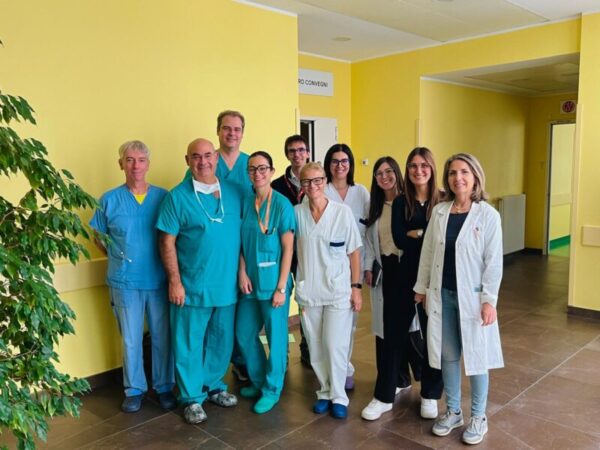
Policlinico San Marco, department of General, Oncologic and Bariatric Surgery – receives the ERAS® Qualification!

Policlinico San Marco, department of General, Oncologic and Bariatric Surgery – receives the ERAS® Qualification!

The Policlinico San Marco (part of Gruppo San Donato) in Italy is a high volume Center for Bariatric Surgery and a primary center for General surgery. They recently completed their ERAS® Implementation Program within Bariatric and Colorectal Surgery.

Lead by Prof. Stefano Olmi & Dr. Giovanni Cesana, the teams started their ERAS® journey late 2022 and both teams have during the program been able to adapt and modify many of the peri-operative processes in their clinical practice, to further enhance and improve patient outcome.

The team has been supported by Encare’s partner Medtronic and they were trained by Dr Guido Liddo, and Dr Stéphane Ilunga as well as ERAS® Coach Agathe Gennin of the ERAS® Center of Excellence Valenciennes Hospital, France.

We wish them continued success in sustaining their ERAS® work and improve care for their patients!

To learn more how to become ERAS® Qualified, please read more here.

Elevate Your Perioperative Surgery Standards with ERAS® Protocols

Elevate Your Perioperative Surgery Standards with ERAS® Protocols

ERAS® Essentials

Elevate Your Perioperative Surgery Standards with ERAS® Protocols

A consistent, high standard of care across all service lines is critical to reduce variability and improve patient outcomes after surgery. Implementing Enhanced Recovery After Surgery (ERAS®) protocols is a proven strategy to achieve this goal, establishing a unified approach that guarantees every patient receives the same level of excellence, no matter where or what type of surgery they undergo.

Introducing ERAS® Essentials – Simplifying Excellence Across All Surgical Service Lines

Encare now introduces ERAS® Essentials, a groundbreaking protocol designed to extend the benefits of Enhanced Recovery After Surgery across a range of surgical service lines within the healthcare system. ERAS® Essentials is based on the comprehensive principles outlined in “Enhanced Recovery After Surgery: A Complete Guide to Optimizing Outcomes” ERAS® Essentials is designed to scale and covers both emergency and elective surgeries.

The Critical Need for a Unified Standard of Care

Traditionally, ERAS® guidelines have been developed for specific surgical procedures, such as pancreaticoduodenectomy or colorectal resections.1 However, the need for a consistent, cross service line standard of care has led to the development of ERAS® Essentials, which provides evidence-based recommendations that can be applied across various surgical procedures.

Implementing ERAS® across service lines ensures that all patients, whether undergoing emergency or elective surgeries, benefit from the principles of enhanced recovery. ERAS® Essentials serves as a foundational step, providing a strong framework that can support broader applications of ERAS® principles across various surgical procedures as needed in the future. This holistic approach allows for broader and faster application of ERAS® protocols, improving outcomes for a wider range of patients.

Elevating Care Through Benchmarking and Global Collaboration

ERAS® Essentials enables benchmarking on a global, national and local level to drive continuous improvement towards best-in-class patient outcomes.

Being part of the ERAS® community connects your healthcare system with an international network of high-quality providers. This global collaboration fosters the exchange of best practices, insights, and innovations, ensuring that your institution remains at the forefront of surgical care excellence.

Key Benefits of Implementing ERAS® Essentials Across All Surgical Service lines

  • Consistency in Care
    ERAS® Essentials is designed to help the care provider ensure that every patient, undergoing major surgery, receives the same high level of care. This uniformity is crucial in minimizing risks, reducing variability, and ensuring patient safety, as well as length of stay, regardless of the surgical team or procedure.4
  • Improved Patient Outcomes
    By standardizing care across all service lines, the use of ERAS® Essentials helps the hospital team to reduce complications, shorten hospital stays, and accelerate recovery times. Research shows that patients managed under ERAS® Protocols consistently experience better outcomes across various surgical disciplines. 2,3
  • Cost Efficiency
    Standardizing care not only improves outcomes but also reduces costs. By being able to minimize complications and readmissions, the use of ERAS® Essentials drives significant cost savings, making it a financially sound choice for any healthcare provider. 4, 5
  • Service Line Agnostic
    ERAS® Essentials is designed to be adaptable across a range of surgical disciplines, ensuring that every surgical department benefits from the same rigorous, evidence-based care protocols, whether for emergency or elective surgeries. 6, 7
  • Enhancing WHO Surgical Safety Compliance
    ERAS® Essentials covers the key aspects of the WHO Surgical Safety Checklist and integrates elements that complement ERAS protocols, reinforcing critical safety practices. This combined approach aligns surgical teams with evidence-based strategies, promoting patient safety and optimized recovery.8


Implementing ERAS® Essentials – A Commitment to Consistency and Excellence

By adopting ERAS® Essentials across a range of surgical service lines, healthcare providers can ensure a high minimum level of standard care for every patient. This unified approach not only improves patient outcomes but also fosters a culture of excellence and continuous improvement throughout the entire healthcare system. As the first critical step, ERAS® Essentials lays the groundwork for the implementation of more specific ERAS® protocols tailored to individual surgical procedures.

Join the growing number of healthcare facilities worldwide that are implementing ERAS® Essentials to create a cohesive standard of care across all surgical service lines. This commitment to consistency will not only elevate patient outcomes but also enhance operational efficiency, reduce costs, and solidify your reputation as a leader in high-quality, patient-centered care.

For more information on implementing continuous auditing in your institution, please contact us at Encare.

References

  1. Engelhardt KE, Greenberg RS, Golub RM. Perioperative Care of Neonates: Enhanced Recovery After Surgery (ERAS®) Guidelines. JAMA Surg. 2023;158(2):108-118
  2. Varadhan KK, Neal KR, Dejong CH, Fearon KC, Ljungqvist O, Lobo DN. The enhanced recovery after surgery (ERAS®) pathway for patients undergoing major elective open colorectal surgery: a meta-analysis of randomized controlled trials. Clin Nutr. 2010;29(4):434-440.
  3. Greco M, Capretti G, Beretta L, Gemma M, Pecorelli N, Braga M. Enhanced recovery program in colorectal surgery: a meta-analysis of randomized controlled trials. *World J Surg*. 2014;38(6):1531-1541.
  4. Ljungqvist O, Scott M, Fearon KC. Enhanced recovery after surgery: a review. JAMA Surg. 2017;152(3):292-298.
  5. Lee L, Li C, Landry T, Latimer E, Carli F, Fried GM. A systematic review of economic evaluations of enhanced recovery pathways for colorectal surgery. Ann Surg. 2014;259(4):670-676.
  6. Abola RE, Gan TJ. Enhanced recovery after surgery programs: controversies and answers. Best Pract Res Clin Anaesthesiol. 2019;33(1):99-112.
  7. Barber EL, Van Le L. Enhanced recovery pathways in gynecology and gynecologic oncology. Obstet Gynecol Surv. 2015;70(12):780-792.
  8. Pilkington M, Nelson G, Cauley C, Holder K, Ljungqvist O, Molina G, Oodit R, Brindle M.E. Development of an Enhanced Recovery After Surgery Surgical Safety Checklist Through a Modified Delphi Process. JAMA 2023:6(2):e2248460.

Thank you!

Your email address has been successfully submitted.

We’ll be in touch soon with more information.

Add Your Heading Text Here